Dignity:Liberia
  • Home
  • What is fistula?
    • Liberia: A Nation in Recovery
  • Our Mission
    • Board of Directors
    • Liberia NGO Office
    • Dignity:Liberia Compound
    • Our Partners
  • Get Involved
    • Maternity Waiting Home
    • Past Campaigns and Updates
    • Serve as a Dignity Advocate
    • Healthcare Service Teams
  • Donate
    • Give to Dignity:Liberia
    • Donate Supplies
    • Meet Our Supporters
    • Grants
  • News
    • Let's Palava
    • Board Access (restricted)
    • Photos
  • Contact

In a Fistula Survivor's Voice

6/10/2020

1 Comment

 
Picture
Fistula Survivor’s Name:  Mary Padmore
Interview Date:  February 25, 2020
Interview Location:  Phebe Rehabilitation Center, Bong County
Interviewer:  Kathy Beth Stavinoha
Assisted by: Emma K. Katakpah
 
Mary Padmore is from Bopolu.  She has four brothers and two sisters.  She has two daughters who were staying with her at the Rehab Center.  Their names are Neema (5 years) and Yassa (3 years).  Her husband left her while she was pregnant.  She speaks Kpelle.  I asked her to say something in Kpelle.  She told me that her name is Mary, she is from Bopolu and her mother’s name is Kuma. 
 
When it was time for Mary to deliver her baby, her mother wasn’t there to help, so she went to her uncle who is who is married to a midwife (a tribal birth attendant with no medical training).  The tribal birth attendant (TBA) tried to force delivery by bouncing on the child.  The baby was stuck (possibly because bouncing on the belly causes the cervix to swell, which does not allow for the baby to exit).  She was in pain [in labor] for 3 days, after which the TBA then took her to the clinic. 
 
After an examination, the doctor told her she couldn’t give birth without assistance and called an ambulance to take her to the hospital for a C-section (“operate on me.”).  When the ambulance came, the doctor got vexed [angry].  He acknowledged that the TBA was trying to help, but she was doing the wrong thing and hurting the baby (she was “going to kill the poor child”). 

They first took Mary to Phebe Hospital, but there was no space available, so, they took her to Nimba (a three-hour drive).  They did the operation for the child (C-section) but the baby was stillborn.  The baby probably died during the trip to Nimba.  After 2 or 3 days, her stomach started swelling.  They took her back for a second operation where they removed her womb.  After that operation, she came down with fistula. 
 
Mary had her fistula for 7 months.  She had one fistula repair operation and is now dry.  While at the Rehab Center, she learned how to bake bread and make soap.  Once she graduates from Rehab, she plans to teach her family the skills she has learned.  She will also sell things at the market to help her family.
 
When I asked her what advice she would give other girls, she replied that she would tell her friends with fistula to come to the Rehab Center where people will come and help them.  She added that she would tell her pregnant friends to go to the hospital to give birth, to avoid getting fistula.
 
She feels less of a woman because she can no longer have children.  She will take care of herself.  However, if she meets a man who is interested in marriage, she will explain her problem [that she’s had a hysterectomy and cannot provide children] and if he accepts that, she will know he loves her and doesn’t just want her to provide offspring.

1 Comment

In a Fistula Survivor's Voice

6/3/2020

1 Comment

 
Fatu Tokpah - Part II
Fistula Survivor, Business Woman, Advocate
Interviewed on February 25, 2020 by Kathy Beth Stavinoha

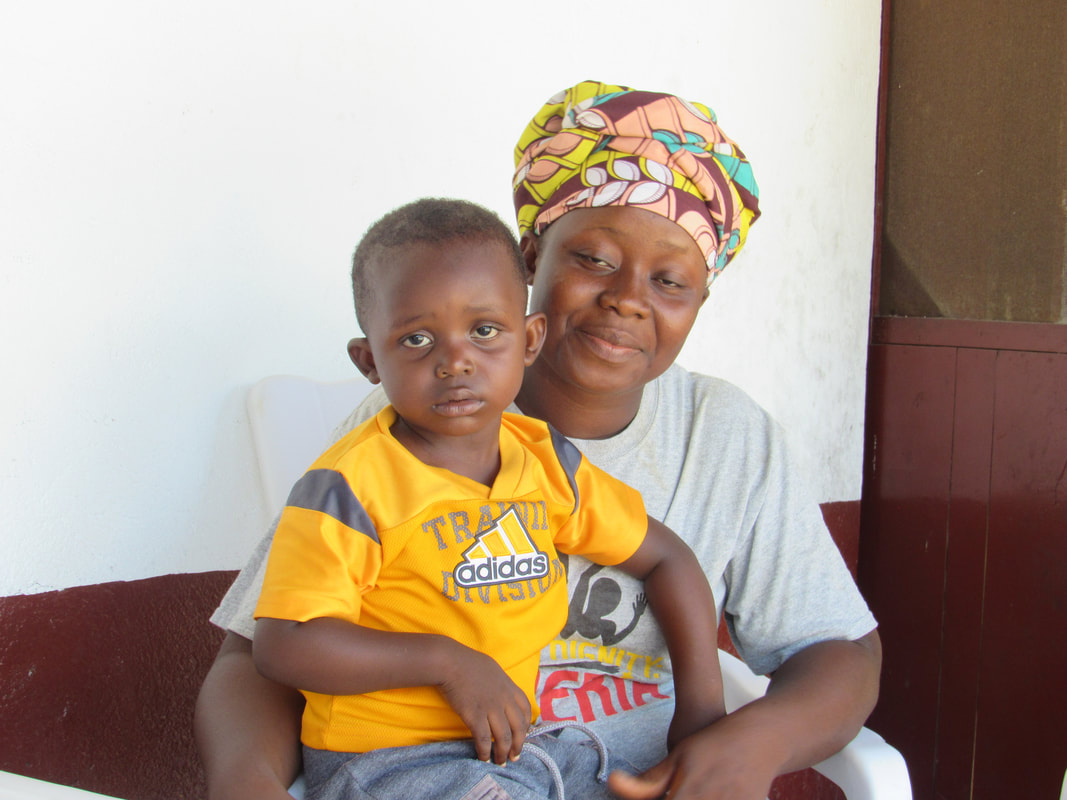
When I asked Fatu if she had anything she wanted to say, she made a passionate plea to those who have funded the Phebe Rehab Center in the past.  At the time of the interview, the Rehab Center had not received funding for months. The teachers and other staff who remained, had not been paid in months. 

Transcript:
“I’d like to say, thank you all that came to see us again.  And I’d also like to say, we are begging you, we beg you so much: please don’t forget about us. I know that you cannot forget about us because there is a long distance that you cover to come to see us, so I bless God ever so much.  

And I want to ask all the organizations that were helping this process.  I want to ask them.  All of us that are up there, they are losing hope that they are no longer a woman again.  I want to ask them whatsoever that tie them up [whatever discourages organizations from helping] let God help them that they will think about fistula survivor.  So that they can empower us. Because our sisters up there, they want to come.  But every day they are listening to the radio that the Center is closing gradually.  The Center is closing.  No support now for this organization [the Phebe Rehab Center].  

As you can see here, this place used to be rich [flourishing].  We used to eat the best.  We used to play.  We used to learn the best.  But I came to see my friends.  I cannot see anything.  The classes are closed.  So I ask UNFPA to join Dignity, all organization to join Dignity, to support our friends. To support us.  It’s not easy when you have this problem. No one wants to associate themselves with you. In the community you will be alone.  Even your partner that put you in the problem, they will stay away from you.  This is where we come to feel like humans again.  So if this place closes, many women will die up there.  Many people will be neglected.  But when you come here, you learn.  You carry on your daily process.  People feel good.  People always pair like me. 

When I graduated from here, when I went, all of my parents came around me.  Friends who had not wanted to associate with me, they came around me.  They were so happy because when I left, I was very fat.  Shiny [in good health], because I ate the best.  So, I ask, I ask, I’m begging you, to please stand by us.  To stand by our friends up there.  To encourage our friends to come. And what will encourage them to come?  When they come, they see food.  Food makes you human.  They see things that we learn.  They will be encouraged to stay here.  Whenever they come for their surgery, they come, they see the place dry [deserted] like this, they will be discouraged. They will say, ‘better I go home and be dead.’  So, we’re asking you to please empower us.  Please, we are begging you.  We ask God to beg you to please do not forget about us.  Please stand for us that we will have hope again.” 
1 Comment

In a Fistula Survivor's Voice

6/2/2020

1 Comment

 
Picture
Fistula Survivor’s Name:  Fatu Tokpah
Interview Date:  February 25, 2020
Interview Location:  Phebe Rehabilitation Center, Bong County
Interviewer:  Kathy Beth Stavinoha

I first interviewed Fatu Tokpah in 2018, while she still resided at the Phebe Rehab Center.  While there, she learned how to be a beautician (“how to plait hair”) and how to make soap.  She has since graduated and returned home.  

Fatu now lives in Monrovia where she is in business, selling clothes at the market to make a living.  Her market day hours are from 7:00 in the morning till 6:00 in the evening.  
 
When she heard that Dignity:Liberia was going to be at the Rehab Center, Fatu traveled to Bong County to visit us and to see her friends who remained there.  During the interview, I asked her if she speaks any other languages.  She reminded me that she is Kpelle and that in 2018, she taught me how to say, Yaa-tuawe (hello) and Ku-maneeju (what’s up).  This year she taught me, Eecolekaye which means, “how do you feel in your body?”  I replied, “Thank God.”  That is to say, I am well. 
 
Her little boy, Joseph, was too shy to say hello.  She told me “this is my baby.”  She gave birth to him before coming down with her problem [fistula] and she blesses God ever so much that she and her baby survived, because most of her friends “that born their baby, the baby did not make it” [their babies were stillborn].  She also blesses God for her husband because he did not put her to shame, but stood by her.  She said, “By the grace of God I did my first surgery, I was not too successful, and the second surgery, God blessed me, I got well.” 
 
She encourages her friends [with fistula] to come to the Phebe Rehab Center because at home “you feel like you’re nothing now.”  She added that at Rehab, they will learn to do one or two things for themselves. 
 
Her interview is split into two parts.  In Part I, she brings us up to date on her life since leaving the Rehab Center in 2018.  In Part II, she makes a plea to those who have supported the Rehab Center for at this time, the Phebe Rehab Center has not received funding for several months.

1 Comment

In a Fistula Survivor's Voice

3/12/2019

0 Comments

 
Picture
Fistula Survivor’s Name:  Beatrice Yohnson
Interview Date:  September 4, 2018
Interview Location:  Phebe Rehab Center, Bong County, Liberia
Interviewers:  Kathy Beth Stavinoha and Kathi Gutierrez
 
Beatrice Yohnson was born in October in Doala in Monrovia.  She has five brothers and five sisters.  They all had the same parents: one ma, one pa.  She is the second oldest.  She had five children.  Two died.  Her other three children, ages five, seven, and eight, are living with her mother in Monrovia.  Her husband and father died are dead; they were sick.  She is 35 years old.  She has gone through 6th grade. 
 
Her fistula was not the result of prolonged labor, but was the result of an operation at Redemption Hospital in Monrovia, in 2017.  She was heavy and had a big tumor.  As they cut out the tumor, they cut something that caused her fistula.  Then she “pee peed” on herself. 
 
She always had to wash.  She was always crying.  So she asked God to help her.  The Redemption doctors sent her to Phebe Hospital.  One of her brothers took her there. 
 
She has had five surgeries for her fistula, but her fistula is not gone.  She is “leaking small” (has incontinence) now.  When she goes back to Monrovia, she will open a pastry shop.  For now, however, she’s going to stay at the Rehab Center – she is not going to graduate.  She has no friends at the Rehab Center, only God and us.
 
Only her mom knows she has a fistula.  Her friends don’t know because she was ashamed.  She wants help.  Only her mother, Dignity:Liberia, and God are helping her.   
 
She would send friends with fistulas to Phebe. 
 
Beatrice is a fistula survivor.  “In Jesus’ name, Amen!”  Hear her story in her own voice.

*My comment that fistula is caused by a midwife, was a reference to a tribal birth attendant who is medically untrained.
0 Comments

In a Fistula Survivor's Voice

2/27/2019

0 Comments

 
Picture
Fistula Survivor’s Name:  Rebecca Kollie
Interview Date:  September 4, 2018
Interview Location:  Phebe Rehab Center, Bong County, Liberia
Interviewers:  Kathy Beth Stavinoha and Kathi Gutierrez
 
Rebecca Kollie is 45 years old.  She has had a fistula for 31 years.  She had one fistula repair surgery.  She is improved, but she is not dry.  “The pee pee is still coming.”  She needs another surgery. 
 
Rebecca was born in Phebe and lived in Gbarnga.  She has no one to help her.  She has no children.  She gave birth to one child but the child did not live.  She is alone.  Her mother is old now.  She has no husband.  No one.  She had six brothers but three died.  She has one brother but he is not around her.  He is the one who brought her to the Phebe Rehab Center.  She has a sister in Totota.  None of her relatives will help her.  Her family hated her. 
 
She got sick and was always wet.  She spent a lot of time washing clothes.  Every day.  For 31 years.     
 
She is learning pastry making.  She can bake bread and cake.  She can make doughnuts, cornbread, and shortbread.  Doughnuts are her favorite. 
 
Rebecca is “trying small small by the Grace of God.”  She is a fistula survivor.  Hear her story in her own voice.

0 Comments

In a Fistula Survivor's Voice

2/20/2019

0 Comments

 
Picture
Fistula Survivor’s Name:  Jestina Doty
Interview Date:  September 4, 2018
Interview Location:  Phebe Rehab Center, Bong County, Liberia
Interviewers:  Kathy Beth Stavinoha and Kathi Gutierrez
 
Jestina Doty was born in Maryland County and grew up in Harper.  She has no parents.  She has two brothers but they are not doing anything for her. 
 
Jestina was in labor for four days.  Her brothers would not help her.  Her friends stayed with her and helped her.  She  went to the CRC Hospital, the “company hospital” (Cavalla Rubber Corporation).  They took the baby out with their bare hands; they did not use gloves.  Her child is dead.  She got “the pee pee,” but did not know why.  Her clothes would get wet. 
 
She got her fistula in 2007.  She heard about the fistula repair over the radio.  She had her surgery at Phebe in 2018.  She has had three surgeries but she is still leaking.  She is resting before having any more surgeries.  She has been at the Center for one year.  She would advise her friends to go to the Rehab Center. 
 
She was not scheduled to graduate in September, but was going to stay at the Rehab Center.  She took Cosmetology as her trade.  She wants to plait hair in the market to earn money.  She also learned soap making.  She wants to sell things in market. 
 
She will open her business while waiting for her next surgery.  After graduation, she will go to Harper, Maryland to set up here Cosmetology station. 
 
Jestina is a fistula survivor.  Hear her story in her own voice. 

0 Comments

In a Fistula Survivor's Voice

1/30/2019

1 Comment

 
Picture
Fistula Survivor’s Name:  Wonseh Darbee
Interview Date:  September 4, 2018
Interview Location:  Phebe Rehab Center, Bong County, Liberia
Interviewers:  Kathy Beth Stavinoha and Kathi Gutierrez
 
Wonseh Darbee was born and raised in Nimba County, in 1982.  Her pa died but she still has her ma.  She has two brothers and one sister.  She is the big sister in the family.  When she was a child, she played soccer, told jokes, and cooked.  She was about 10 years old when she started cooking.  She went through the 8th grade in school and loved studying science and history.  She also loved math.  She is unmarried.
 
Wonseh went to a clinic* to deliver her baby and was in labor for four days.  She delivered her baby on the 5th day, but the baby had died in her womb.  The following day, “the pee pee started coming.”  She had her fistula for 2 years.  She has had three fistula repair surgeries but is still leaking a bit.  She wants a fourth surgery, but the doctors said she needs to rest, then return for the operation.
 
She would tell her friend, when she gets pregnant, to go to the hospital when she is ready to deliver.  The midwife** causes the problem to come – the pee pee and poo poo problem. 
 
The worst thing about having a fistula is that you can’t go among your friends.  A fistula is shameful to women who have them.  No friends would come around.  Her brother helped her but he was the only one besides Dignity:Liberia. 
 
She likes to bake.  At the Phebe Rehab Center, she studied pastry making.  She likes baking bread.  She can also make bar soap.  When she returns to Nimba, she will do everything!  Her #1 skill is pastry.
 
Wonseh will tell her friends and parents that she is a fistula survivor!  And she is!  Hear her story in her own voice. 

*Most likely a local, traditional clinic
 
**A tribal birth attendant who is not medically trained
1 Comment

In a Fistula Survivor's Voice

1/23/2019

0 Comments

 
Picture
Fistula Survivor’s Name:  Patience Wheager
Interview Date:  September 4, 2018
Interview Location:  Phebe Rehab Center, Bong County, Liberia
Interviewers:  Kathy Beth Stavinoha and Kathi Gutierrez
 
Born in Grand Bassa County in 1993, Patience Wheager is the youngest of seven children.  She has four sisters and two brothers.  Her pa died in the war but her ma is still living.  Her husband left her when she got her fistula.  She has a six-year-old daughter (born September 21st) who currently lives in Monrovia with Patience’s aunt.  After graduation, Patience plans to see her daughter in Monrovia and move to Buchanan.
 
She got her fistula in 2014.  Her labor started on a Wednesday but the baby became stuck half in and half out.  Her family took her to the hospital.  Because her people are poor, they had no car for their journey; they slept on the road.  The baby passed away on Thursday and was taken out at the hospital to prevent injury.  After this, she started leaking; she and her clothes were wet.  She also developed paralysis in her legs and feet, requiring her to hold a stick to walk.  She came to Phebe in 2015. 
 
She has had only one fistula repair surgery.  She is not yet dry; she is still leaking.  She will return to Phebe after graduation from the Rehab Center for an additional surgery.  If she ever gets pregnant again, she needs to deliver in a hospital, as she has stress incontinence.
 
She would tell her friend to go to the hospital to have her baby so she wouldn’t get a fistula. 
 
Patience chose to learn pastry making for her trade.  She can make laughing balls, sugar cookies, corn bread, chocolate cake, pigs in a blanket, and short bread.  She will sell her products in the market.  “When you can bake something, you can eat and you can get money.”
 
Patience is a fistula survivor.  Hear her story in her own voice. 

0 Comments

In a Fistula Survivor's Voice

12/27/2018

0 Comments

 
Picture
Fistula Survivor’s Name:  Mommy Doleseh
Interview Date:  September 4, 2018
Interview Location:  Phebe Rehab Center, Bong County, Liberia
Interviewers:  Kathy Beth Stavinoha and Kathi Gutierrez
 
Mommy Doleseh is 37 years old.  She was born and raised in Nimba and lived in a village in the interior.  She no longer has a family.  Before the fistula, she had parents, three brothers, and two sisters.  The family did not care for her once she got her fistula.  They disowned her.  Her family’s abandonment is what hurt her the most.
 
Mommy got her fistula in 1995; her fistula was repaired in 2018.  She had two surgeries before she was healed.  She had her fistula operations in Sanniquelle.  She is dry now. 
 
She got her fistula from prolonged labor (“the baby trying to come out for a long time.”).  After being in labor for 2 days in the midwife’s* house, she was taken to Ganta Hospital.  She has not given birth since her fistula and she has no other children.   
 
She learned Tailoring as her skill at the Phebe Rehabilitation Center.  She plans to return to Nimba to live with her family and open a tailoring shop.  Her favorite color is green.  It is her color.   
 
She has a friend in Nimba who has a fistula.  She will tell her to come to the Rehab Center so she can be healed and learn a trade.  If her friend did not already have a fistula, she would tell her to go to the hospital to deliver her baby.
 
Mommy appreciates the support they receive from Dignity:Liberia.  Their friends and parents will not come close to them but we will and it makes them happy. 
 
Mommy is a fistula survivor.  Hear her story in her own voice.

*The midwife referenced in this interview is a tribal birth attendant who is not medically trained.
0 Comments

In a Fistula Survivor's Voice

12/5/2018

0 Comments

 
Fistula Survivor’s Name:  Helena Johnson
Interview Date:  September 4, 2018
Interview Location:  Phebe Rehab Center, Bong County, Liberia
Interviewers:  Kathy Beth Stavinoha and Kathi Gutierrez

Picture
Helena Johnson is 24 years old.  Born in Bong County, she grew up in Monrovia, located in Montserrado County.  Her mother is dead.  Her father lives in Gbarnga (“Banga”) but she has not seen him in a long time.  She has four brothers.  She has one child, a daughter.  Her baby son died with her mother.
 
Helena got her fistula when she was 22 years old.  When she went into labor, she first saw a midwife.*  The midwife pressed on her stomach, put things in her mouth, and did other things to try to deliver the baby.  After being in labor for 3 days, Helena was taken to Rennie Hospital in Kakata where they operated on her.  However, before they reached the hospital, she developed a fistula.   
 
She is no longer leaking.  After 2 years, she had a fistula repair surgery.  It took only one surgery to clear up her fistula and now she is dry. 
 
She didn’t like being wet all the time.  The hardest thing about having a fistula was that her clothes kept getting dirty; she had lots of laundry. 
 
At the Rehabilitation Center, she chose to study cosmetology for her trade.  After graduation, she plans to return to Monrovia to open up a cosmetology shop and to live her life
 
Helena would tell her friends “they shouldn’t be like me.”  She would encourage them to go to the hospital to give birth.
 
She has gone through 7th grade but couldn’t continue because she has no money.  For her future, she wants to focus on school.  Then she could do things for her children. 
 
Helena is a fistula survivor.  Hear her story in her own voice.

* The midwife referenced in this interview refers to a “traditional midwife” or a tribal birth attendant who has no medical training.
0 Comments
<<Previous
Forward>>

    Categories

    All
    Dignity Advocate Teams
    Hope House
    In A Fistula Survivor's Voice
    Trips

    Archives

    February 2026
    January 2026
    December 2025
    November 2025
    October 2025
    September 2025
    August 2025
    July 2025
    June 2025
    May 2025
    April 2025
    March 2025
    February 2025
    January 2025
    December 2024
    November 2024
    October 2024
    September 2024
    August 2024
    July 2024
    June 2024
    May 2024
    April 2024
    March 2024
    February 2024
    January 2024
    December 2023
    November 2023
    October 2023
    September 2023
    August 2023
    July 2023
    June 2023
    May 2023
    March 2023
    February 2023
    January 2023
    December 2022
    November 2022
    October 2022
    September 2022
    August 2022
    July 2022
    June 2022
    May 2022
    April 2022
    March 2022
    February 2022
    January 2022
    December 2021
    November 2021
    October 2021
    September 2021
    August 2021
    July 2021
    June 2021
    May 2021
    April 2021
    March 2021
    February 2021
    January 2021
    December 2020
    November 2020
    October 2020
    September 2020
    August 2020
    July 2020
    June 2020
    May 2020
    April 2020
    March 2020
    February 2020
    January 2020
    December 2019
    November 2019
    October 2019
    September 2019
    August 2019
    July 2019
    June 2019
    May 2019
    April 2019
    March 2019
    February 2019
    January 2019
    December 2018
    November 2018
    October 2018
    September 2018
    August 2018
    July 2018
    June 2018
    May 2018
    April 2018
    March 2018
    February 2018
    January 2018
    December 2017
    November 2017
    October 2017
    September 2017
    August 2017
    July 2017
    June 2017
    May 2017
    April 2017
    March 2017
    February 2017

    RSS Feed


    Visit our photo gallery >
 
Bringing restoration and hope to women with fistula and their communities 
through healing, education, and prevention.

Let's  end fistula together

Follow. Like. Share.
Dignity:Liberia is a 501(c)3 not for profit corporation. 
Donations made to Dignity:Liberia are tax deductible to the extent allowed by law.
© 2020  Dignity: Liberia
Web Design + Development by The Brave Creative