Dignity:Liberia
  • Home
  • What is fistula?
    • Liberia: A Nation in Recovery
  • Our Mission
    • Board of Directors
    • Liberia NGO Office
    • Dignity:Liberia Compound
    • Our Partners
  • Get Involved
    • Maternity Waiting Home
    • Past Campaigns and Updates
    • Serve as a Dignity Advocate
    • Healthcare Service Teams
  • Donate
    • Give to Dignity:Liberia
    • Donate Supplies
    • Meet Our Supporters
    • Grants
  • News
    • Let's Palava
    • Board Access (restricted)
    • Photos
  • Contact

In a Fistula Survivor's Voice

11/29/2018

0 Comments

 
Picture
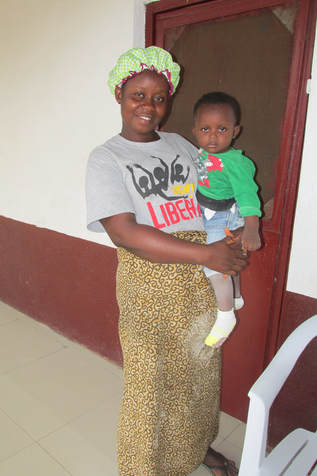
Fistula Survivor’s Name:  Maima Modoba
Interview Date:  September 4, 2018
Interview Location:  Phebe Rehab Center, Bong County, Liberia
Interviewers:  Kathy Beth Stavinoha and Kathi Gutierrez
 
Maima Modoba was born in Phebe where she also grew up.  She has four sisters and two brothers.  She has not gone to school.  She learned the alphabet at the Phebe Rehabilitation Center.  She also learned how to count and add money at Rehab.
 
She was living in Red Light, Monrovia when she got her fistula in March 2016.  When she went into labor, she went to a midwife* who told her she was fine.  God took Maima from there; the midwife transferred her to JFK Hospital.  It was too late – she had developed a fistula and her child did not make it.  She had her fistula for 2 years but after [indistinguishable] fistula repair surgeries, she is now dry. 
 
The most difficult thing about having a fistula was that her friends shunned her.  She felt different because she had the “pee pee sickness.”  She couldn’t go around her friends. 
 
She learned two trades at the Phebe Rehab Center: tailoring and soap making.  She likes tailoring better and plans to be a tailor in Red Light.  She does not want to leave the Rehab Center because she wants to keep learning. 
 
She would tell a friend that she learned something from her fistula experience.  If you know giving birth causes a fistula, you need to put that knowledge to good use.  If you put it to good use, it will help you and help your family.
 
She has nobody to help.  Her family will not help her.  She will have to support herself.  She wants to be somebody tomorrow. 
 
Maima is a fistula survivor.  Hear her story in her own voice. 

* The midwife referenced in this interview refers to a “traditional midwife” or a tribal birth attendant who has no medical training.
0 Comments

In a Fistula Survivor's Voice

11/14/2018

0 Comments

 
Picture
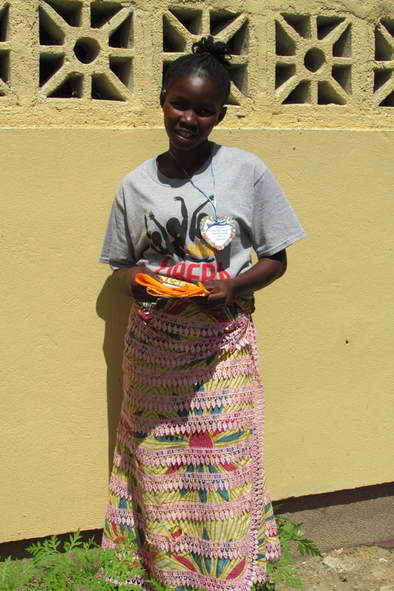
Fistula Survivor’s Name:  Hawa Kerkula
Interview Date:  September 4, 2018
Interview Location:  Phebe Rehab Center, Bong County, Liberia
Interviewers:  Kathy Beth Stavinoha and Kathi Gutierrez
 
Hawa Kerkula was born in Lofa County.  She grew up in Margibi with her three brothers.  On April 18, 2017, she went to the hospital for a C-Section.  Her child did not live.  A week later, she started experiencing her problem (leaking).  She was in the 12th grade. 
 
Having an obstetric fistula is embarrassing.  You can’t go among your friends.  You have to stay alone.  Even if you have someone encouraging you, you can end up killing yourself.  It is very bad.
 
Hawa learned three trades: cosmetology, soap making, and embroidery.  Her favorite is embroidery.  After she graduates from the Phebe Rehabilitation Center, she is returning to Margibi where she hopes to finish high school before setting up a business.  It would be hard to go to school and run a business at the same time because she would not pay attention to her lessons.  She just has to complete her senior year.  She really wants to go to school.  Last year her father died and she has no help. 
 
If her friends were pregnant, she would advise them to go to the hospital or a clinic to have their baby.  She would discourage them from going to a midwife* because she would cause the fistula.
 
Hawa is a quiet girl and she needs help because she really wants to learn.  She comes from a poor background and she wants to help her people but she has no support.  She appeals to anyone who hears her voice to please come to her aid. 
 
Hawa is a fistula survivor.  Hear her story in her own voice.

* The midwife referenced in this interview refers to a “traditional midwife” or a tribal birth attendant who has no medical training.
0 Comments

In a Fistula Survivor's Voice

11/2/2018

0 Comments

 
Picture
Fistula Survivor’s Name:  Leemue Cooper
Interview Date:  September 4, 2018
Interview Location:  Phebe Rehab Center, Bong County, Liberia
Interviewers:  Kathy Beth Stavinoha and Kathi Gutierrez
 
Leemue Cooper has served as the matron of the Phebe Rehabilitation Center since July 2011.  She is originally from Bopolu.  She has four children: three boys and one girl.  She had two brothers and four sisters, one of whom was her twin.  Her twin passed about 3 weeks before this interview.  When she died, Leemue took in her two granddaughters, as their mother is also deceased.  Leemue has five grandchildren of her own.
 
Leemue got her fistula on April 18, 1981 while delivering her first baby, who did not survive.  She had been in labor for four days.  She could see the “water” (urine) running, which was very difficult for her.  She cried all day and night.  They didn’t call it fistula.  They called it the “pee pee problem.”  She didn’t want to be around anybody.  Any time she stood up, she had to feel under her clothes to see if she was wet.  It was not easy. 
 
Then she was taken to Phebe.  She saw three girls suffering from the same thing and she realized she wasn’t alone.  Her fistula was repaired with only one surgery.  Of the other three girls, one did not survive surgery. 
 
She has never had another fistula because her next three children were delivered by C-section.  She didn’t wait to go into labor.  Twenty to twenty-eight days into her 9th month of pregnancy, she would go to the hospital for the surgery. 
 
What made her sad about having a fistula is that she felt like nobody in society.  She felt like spoiled goods.  She felt as if she had been broken.  It’s a bad feeling but, if your friends come around you, you aren’t as anxious. 
 
When the new survivors arrive at the Rehabilitation Center, she likes to draw close to them so they know they are not alone.  Even though she’s the matron, she wants them to feel they are like her.  She wants them to know that she was like them before.  She teaches the girls how to fold their clothes so that their urine doesn’t leak through.  It used to be difficult to control the different girls, but God has helped her.  She can put them together. 
 
Their typical day starts at 7:00 or 7:30.  Everyone finishes bathing before 7:00.  At 7:30, they start their work.  During the week, the girls need to take care of themselves; they go to class, they eat and they clean their own rooms and wash their own clothes.  Sometimes they stay up until  10:00 o’clock.  They gather in the palava hut and play.  They have a laptop to watch a video.  Around 10:00 or 10:30 they go to bed though some of the girls do not go to bed until 11:00.  They now have electricity hooked up to solar.  The only time they can’t get electricity is when it’s out on the entire compound. 
 
Dignity:Liberia has done so many things for them.  They bring clothes and toys and plastic panties** for the girls.  The girls can’t buy anything at Rehab.  She can’t name everything they do.  They come and visit twice a year and make them happy.  She is very appreciative of Dignity:Liberia’s help. 
 
The greatest need for the girls living at the Rehab Center includes bedding, plastic mattress covers, and many small things including deodorant. 
 
Leemue would like people in the United States to know that in Africa, when girls living in rural areas go into labor, they can’t go to the hospital.  They go to midwives* who use their bare hands to deliver babies.  So they are asking the American people to help get rid of fistula in Africa as a whole.  The people in Liberia really want fistula to go away.  They need to teach nurses so they can be trained to deal with fistula.

Leemue is a fistula survivor.  Hear her story in her own voice.

*The midwives referenced in this interview are not medically trained.  Typically, they are a tribal birth attendant.
 
**
Depends
0 Comments

In a Fistula Survivor's Voice

10/25/2018

0 Comments

 
Picture
Fistula Survivor’s Name:  Fanta Fafana
Interview Date:  September 3, 2018
Interview Location:  Phebe Rehab Center, Bong County, Liberia
Interviewers:  Kathy Beth Stavinoha and Walter Matthews
 
Fanta Fafana was born in Montserrado County, Liberia.  Both of her parents are deceased.  She was living with her brother but since she got her fistula in 2015, he doesn’t have time for her.  She got her fistula through “borning.”  During her labor, they took her behind the house and tried unsuccessfully to help the birthing process.  Then they took her to the hospital.  When she got to the hospital, her baby was dead.
 
The worst thing about having a fistula was that she couldn’t go among people.  She had to be by herself.  Having a fistula made her sad.  It made her want to kill herself. 
 
Fanta studied cosmetology for her trade at the Rehabilitation Center.  She chose cosmetology because she wants to do something good for herself.  Upon graduation, she plans to stay in Gbarnga. 
 
She is healed “small small,” but is still leaking. 
 
She would advise girls to study, as a way to avoid getting a fistula.  Fanta would like to go to school.  She has passed her exams but she cannot afford to go to school because she has no money.  She wants people to know that she is looking for financial help. 
 
Fanta is a fistula survivor.  Hear her story in her own voice:

0 Comments

In a Fistula Survivor's Voice

10/17/2018

0 Comments

 
Picture
Fistula Survivor’s Name:  Fatu Tokpah
Interview Date:  September 4, 2018
Interview Location:  Phebe Rehab Center, Bong County, Liberia
Interviewers:  Kathy Beth Stavinoha and Kathi Gutierrez
 
Fatu Tokpah grew up in Monrovia.  She was born September 28, 1990 in Duside Hospital on the Firestone Plantation where her father works as a driver and a heavy duty mechanic.  He is still alive but her mother has passed.  She has eight brothers and sisters.  Her father has five children by her mother and four from another.  She did not go to school.
 
Fatu got her fistula on October 11, 2016.  Three days after giving birth, she saw that she was soiling herself, but she couldn’t feel it.  She had heard of the “poo poo and pee pee sickness,” but did not know that it was called “fistula.”  When she came down with fistula, she used to cry and worry.  She felt that she would never get well and that her life was over.  She thought she would never feel like a woman again.
 
Her father and her little sister took her to the hospital but the staff there sent her to the fistula center.  They told her the people at the center would help her.  They would treat her, give her a place to stay, and feed her.  They said, “They will do everything for you.”  A nurse gave them directions and they took her to Phebe. 
 
She’s had two surgeries and she still leaks a bit but it’s much better than before.  Previously, she had to change her clothes 9 and 10 times a day but she’s much better.  She will stay in Phebe and have another surgery. 
 
She is married but her husband has abandoned her for now.  She doesn’t know if he will take her back when she is dry, but she hopes that he will because she doesn’t want to have children from different fathers.  She has a little boy named Joseph who was born in Monrovia.  She also has an 8-year-old daughter who currently is staying with her father. 
 
The worst thing about having a fistula is that nobody comes around you.  Not even your parents and family.  Everybody stays away.  Only her father and little sister helped her.  Her father is very old and couldn’t really take care of her.  Her sister is very small, but she was the only one to come around her.  Her other sisters and brothers and friends stayed away from her.  It made her cry for many days.  It really broke her down and made her feel really bad. 
 
At the Phebe Rehabilitation Center, she learned cosmetology as her trade.  She likes doing hair and nails.  When she graduates, she prays that she can do hair because almost all the young girls want to look good.  They want to see their hair fixed and see themselves looking good.  She hopes that with what they give her, she will be able to support herself and her two children. 
 
She will talk to her friends and tell them not to go around boys that will make them pregnant.  She would advise those who are pregnant to go to a fine hospital and stay healthy and strong
 
A fistula is a very shameful and disgraceful problem.  It stops you from going around people.  She appreciates Dignity:Liberia, especially Kathi.  This is Kathi’s second time to visit the Rehab Center during Fatu’s stay there. 
 
To her children she says God should make her strong.  She will be able to support her children with what she learned at Rehab.
 
She does not want her daughter to “get into men business.”  She wants her to be educated.  She asks God to help her and her children and to give her strength.  She doesn’t want her children to be on the streets and get sick. 
 
Fatu is a fistula survivor.  Hear her story in her own voice:

0 Comments
Forward>>

    Categories

    All
    Dignity Advocate Teams
    Hope House
    In A Fistula Survivor's Voice
    Trips

    Archives

    March 2026
    February 2026
    January 2026
    December 2025
    November 2025
    October 2025
    September 2025
    August 2025
    July 2025
    June 2025
    May 2025
    April 2025
    March 2025
    February 2025
    January 2025
    December 2024
    November 2024
    October 2024
    September 2024
    August 2024
    July 2024
    June 2024
    May 2024
    April 2024
    March 2024
    February 2024
    January 2024
    December 2023
    November 2023
    October 2023
    September 2023
    August 2023
    July 2023
    June 2023
    May 2023
    March 2023
    February 2023
    January 2023
    December 2022
    November 2022
    October 2022
    September 2022
    August 2022
    July 2022
    June 2022
    May 2022
    April 2022
    March 2022
    February 2022
    January 2022
    December 2021
    November 2021
    October 2021
    September 2021
    August 2021
    July 2021
    June 2021
    May 2021
    April 2021
    March 2021
    February 2021
    January 2021
    December 2020
    November 2020
    October 2020
    September 2020
    August 2020
    July 2020
    June 2020
    May 2020
    April 2020
    March 2020
    February 2020
    January 2020
    December 2019
    November 2019
    October 2019
    September 2019
    August 2019
    July 2019
    June 2019
    May 2019
    April 2019
    March 2019
    February 2019
    January 2019
    December 2018
    November 2018
    October 2018
    September 2018
    August 2018
    July 2018
    June 2018
    May 2018
    April 2018
    March 2018
    February 2018
    January 2018
    December 2017
    November 2017
    October 2017
    September 2017
    August 2017
    July 2017
    June 2017
    May 2017
    April 2017
    March 2017
    February 2017

    RSS Feed


    Visit our photo gallery >
 
Bringing restoration and hope to women with fistula and their communities 
through healing, education, and prevention.

Let's  end fistula together

Follow. Like. Share.
Dignity:Liberia is a 501(c)3 not for profit corporation. 
Donations made to Dignity:Liberia are tax deductible to the extent allowed by law.
© 2020  Dignity: Liberia
Web Design + Development by The Brave Creative